Pitch Green: Simple Swaps for Eco-Friendly Camping
If you like camping but don’t want the noise and crowds, Small Campsites lists sites eto pitch tents and park caravans and motorhomes, listed by region and type (all-year, family, dog-friendly etc).
Keep dogs on leads where rules apply, walk only on marked trails, keep away from swimming in streams and ponds, and clean up after your pooch, using biodegradable poop bags. Also ensure dogs have good recall (to protect them and wildlife).
Read about pet safety (to avoid toxic plants and hazards).
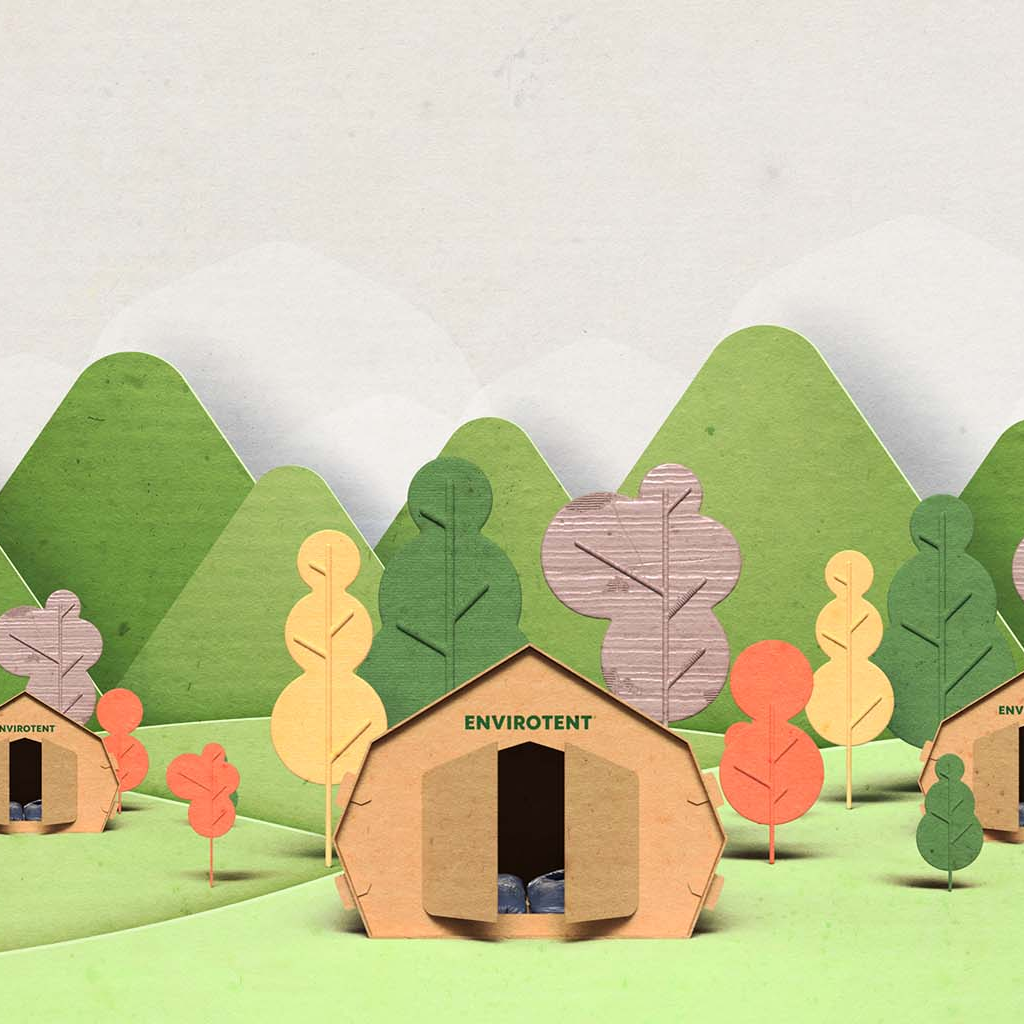
Envirotent (a water-resistant cardboard tent)
Envirotent makes sturdy cardboard tents that are warmer, sturdier and darker than nylon (plastic) tents. And a lot easier to put up, without the bother of tent pegs! They are insulated and water-resistant (not totally waterproof). And are easy to dismantle and recycle, at end of use.
Obviously don’t smoke in or near it (that goes for any kind of tent). Any cooking should take place at least 2 metres away from the tent.
These tents are not the same as cardboard boxes. They are made from a high-performance board that has fewer surface holes, enhancing water resistance.
So they can brave heavy rainfall (and survive up to 4 weeks outside in winter) without need for coatings. A great ideal also for rough sleepers, to keep warm and dry.
This company does not ‘sell tents’ to the public, but rather sells them to sites for music festivals, then collects and recycles them at end of the event, to stop the 1 in 4 plastic tents being left and littered. Campers are welcome to take their tents home, but they are not easy to transport due to their size.
Wild camping without permission, is actually illegal in England. So councils need to clamp down.
- Read The Little Book of Building Fires, a nice little guide on how to safely build fires, and just as importantly, how to safely put them out.
- Read The Green Camping Book and follow camping etiquettes (don’t drop litter, camp on durable surfaces and respect others and wildlife).
- The Greener Camping Club lists over 70 sites, and plants a tree for anyone who pays the £12 membership fee.
There are sites where you can camp in people’s gardens, but care must be taken to ensure dogs and wildlife are safe, with secure organic lawns.
Helpful tips for greener camping
- If you smoke, use a personal ashtray (to safely stub out butts).
- Choose unscented biodegradable beauty and laundry products.
- Pee at least 30 metres from rivers and streams (if there no loos nearby, poo at least 60 metres away (away from farm animals), and cover your ‘business’ with soil and leaves!)
- Wild camping is illegal in most parts of England (to protect private land, plants and wildlife from trespassing, fires and barbecues.
Low-waste swaps for cooking and eating
- Bring a reusable water bottle for each person, plus one larger refill bottle (or a water carrier)
- Use a mug, bowl and spoon from home, over disposables. A basic-wash-up kit only needs a small amount of biodegradable dishwash liquid.
- Use soap sparingly, and keep it well away from streams, lakes, and drains on the pitch.
- Use lidded containers to store leftovers, and use take your rubbish home.
- Take reusable cutlery and mugs, and a small flask for hot tea.
Low-waste swaps for washing and toilets
- Use washable flannels over disposable wipes, even an old cotton t-shirt cut into squares.
- Use biodegradable soap and shampoo. Wash at least 60 metres (around 70 adult steps) from water streams and follow toilet disposable rules.
- Choose zero waste feminine care, packed in sealed bags.
- Use wind-up and rechargeable torches and lanterns.
Tent Litter and Waste in England
Around 250,000 tents are abandoned each year in the UK, creating around 900 tonnes of plastic waste (around 70% of people only use a tent once, when bought). Made mostly from polyester or nylon, most end up on landfills or are incinerated.
On mainland Europe, there are many places where people can rent a tent, but as yet, they have not taken off here. You can drop off unwanted camping gear at some outdoor shops for recycling, so ask beforehand (or ask your council, if not).
How do Composting Toilets Work?
Composting toilets are not as icky as they sound. When you remove water traps, you usually remove most of the smell (they kind of have an ‘earthy aroma’). They are great for campsites, churches and allotments.
Most composting toilets use bacteria to break down solid waste (poo!) into nutrient-rich compost (note you can’t use animal poo to make compost, as it’s illegal to sell plants made with it).
Most composting toilets also separate urine and faeces, as pee can disrupt the composting process. When done well (good ventilation and drying systems), the toilets are emptied and need little water, and create far less environmental impact. So are ideal for ‘wild areas’ where there is no mains water supply. Good composting toilets are just as clean (if not more so) than most conventional ones.
In England especially, it’s important to separate the urine, as it won’t evaporate, due to our rainy cold climate. Modern composting toilets are designed by experts, who offer an ideal alternative to small chemical toilets.
RHS (Royal Horticultural Society) has recently installed its first composting toilet at its Wisley Garden in Surrey. It will use the human compost, to fertilise its flowerbeds!
Natsol is the brand leader, which makes waterless and odour-free composting toilets for outdoor spaces, with wheelchair-friendly options. This company also offers waterless urinals which are odour-free and low-maintenance, which need no cartridges. Ideal especially for music festivals (due to the amount of beer!)
The company has recently taken over AirFlush Urinals, which basically ‘flush with air’, rather than water. This gets rid of the awful smell in urinals, and also saves a colossal amount of water. Companies that install them also don’t need to worry about those blue scented blocks or oil-filled trapped.
Composting Toilets Save Water
Traditional flush toilets use up litres of fresh water every time you pull the handle. Most people don’t realise that nearly a third of all household water goes right down the loo. Composting toilets flip this equation on its head by using little or no water. This shift matters, especially for areas where dry summers or regular droughts make water precious.
- Traditional toilets use 6 to 13 litres of water per flush, an annual yearly water use (per person) of 11,000 to 18,000 litres
- Composting toilets use 0 water, and 0 litres per person per year!
Flushing away clean water doesn’t make sense when you can keep it for things like drinking, cooking, or watering plants. Composting toilets help ease the pressure on overworked water supplies and are a smart fit for water-conscious homes.
Reduction in Pollution and Wastewater
With flush toilets, waste ends up in the sewers, leading to huge volumes of wastewater that must be treated before being released back into rivers and seas. Problems start when ageing infrastructure leaks or overflows. Pollution can enter soils, streams, or groundwater, bringing nasty surprises.
By quickly separating liquids from solids and containing waste, composting toilets make it safer and easier to manage. They don’t add to the rivers of sewage that sometimes escape into nature after heavy rain.
This cleaner approach protects wildlife and reduces the risk of contamination. The smaller, managed volumes of treated waste also mean less strain on town or city sewer systems.