How to Prevent Birds Flying Into Windows
Worldwide, billions of birds die each year from flying into glass (residential or commercial buildings and even greenhouses). With more ancient building facades having been replaced by glass (and many buildings lit up at night), numbers of bird strike fatalities have increasd.
Yet a few simple swaps from people who live/work in homes or offices (and better town planning) could greatly reduce this number.
Also read how to safe havens for garden birds (planting natural habitats in the countryside like hedges and trees, helps to keep birds away from more dangerous urban areas).
Turn off lights when not in use
This is not enough alone. But as glass reflects, confused birds often fly into glass (territorial birds can fly into their own reflection).
- Turn off lights when not in use (including outdoor lights).
- Use curtains, blinds and desk lamps, if possible.
Don’t face plant foliage to outdoor gardens
For the same reason, birds that see foliage inside a glass window, may mistake it for the garden. So if you grow indoor plants, place them away from where birds could see them from outside.
Whether you grow indoor or outdoor plants, read up on pet-friendly gardens (some plants like lilies and sago palm can harm animal friends, even from a tail brushing past).
Be careful where you place bird feeders
- Birds Canada recommends placing feeders within 1 m/3 ft of a window, so birds cannot build up enough momentum to fly into windows.
- Environment Canada notes that the evidence for ‘farther than 10m/30ft’ is not as firm as people often claim. Cornell also says the old feeder-distance rule should not replace making the glass bird-friendly.
- Avoid landscaping walkways that could funnel birds towards glass.
- Place feeders at least 5/6 feet above ground (away from cats) and sheltered from strong wind/sun, with a 360-degree view to spot predators.
Use Feather Friendly visual markers
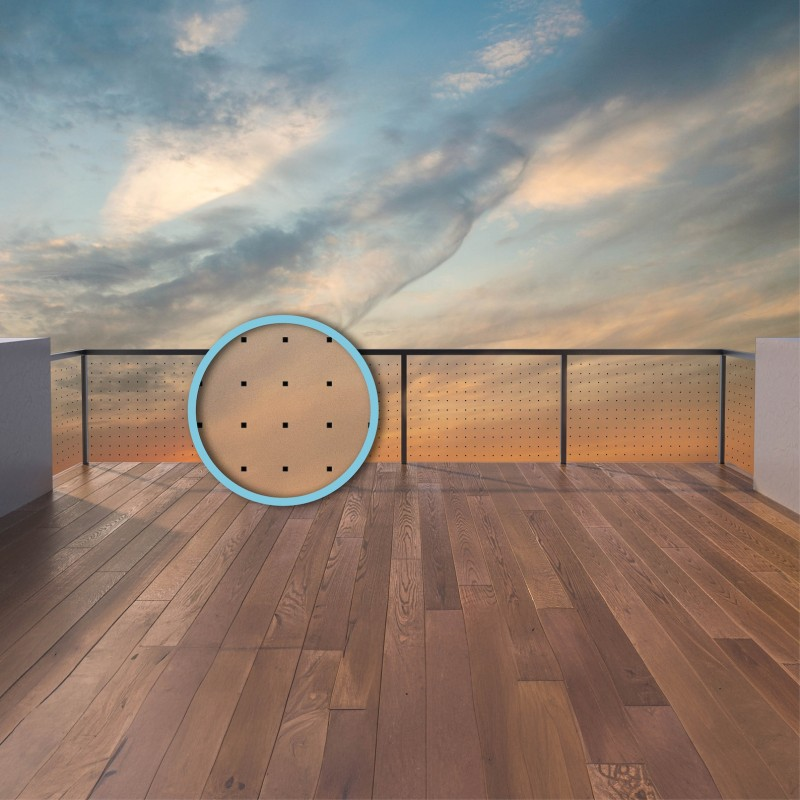
Feather Friendly are visual markers (sold in the UK at Etsy). They are far more effective than window decals (which to be effective need to almost cover the window, and would block out light).
You just remove the temporary transfer tape and then apply to glass. The markers don’t block out light. But birds can see the glass window, so don’t crash into it. Includes instructions. It’s a mystery why they are not sold by garden centres (and RSPB), as they could save millions of birds.
Bird-friendly glass buildings
Bird-friendly glass can be one part of bird-safe design, particularly for new construction. BirdDivert is a UV-based bird collision deterrent treatment applied to glass. It’s like an UV-based alternative to Feather Friendly visual markers (so birds can see it, but it does not affect light for humans).
Similarly, films, markers, screens, and other treatments are collision prevention solutions, not all ‘glass’. For information on ‘bird-friendly glass’ visit Pilkington and Guardian Glass.
Start a FLAP program in your community
FLAP programs (stands for ‘fatal light awareness program’) exist in many cities along migration routes. Reducing night-time lighting is important (esp. during migration), although even in daytime, untreated reflective and transparent glass remains a major risk.
- Lights Out programs help reduce disorientation. While exterior glass treatments help prevent collisions.
- Conduct a local survey (if you see feathered prints on windows or window decals, this is a clear sign that people want to help).
- Order a volunteer training manual. You can then educate local people, and bulk-buy solutions above, to stop bird strikes.
How to help birds that fly into windows
If you hear a thud and find a stunned bird:
- Gently place the bird in a ventilated box lined with a cloth (no tassels). If you have no box, a clean paper bag with ventilation holes will do. Do not give the bird food or water.
- As stunned birds may still have internal injuries if they fly away, a safer recommendation is to place the bird in a dark ventilated container and contact a licensed wildlife rehabiliator or local wildlife rescue as soon as possible. Find more info at FLAP.
Books to help prevent bird strikes
- Solid Air is by the world’s expert in preventing bird-window collisions. He condenses over 40 years of experience, for builders and councils.
- The Bird-Friendly City is packed with proven solutions for urban birds. Includes case studies of how to stop birds flying into windows.