The Green Clean Kit: Essential Plastic-Free Tools
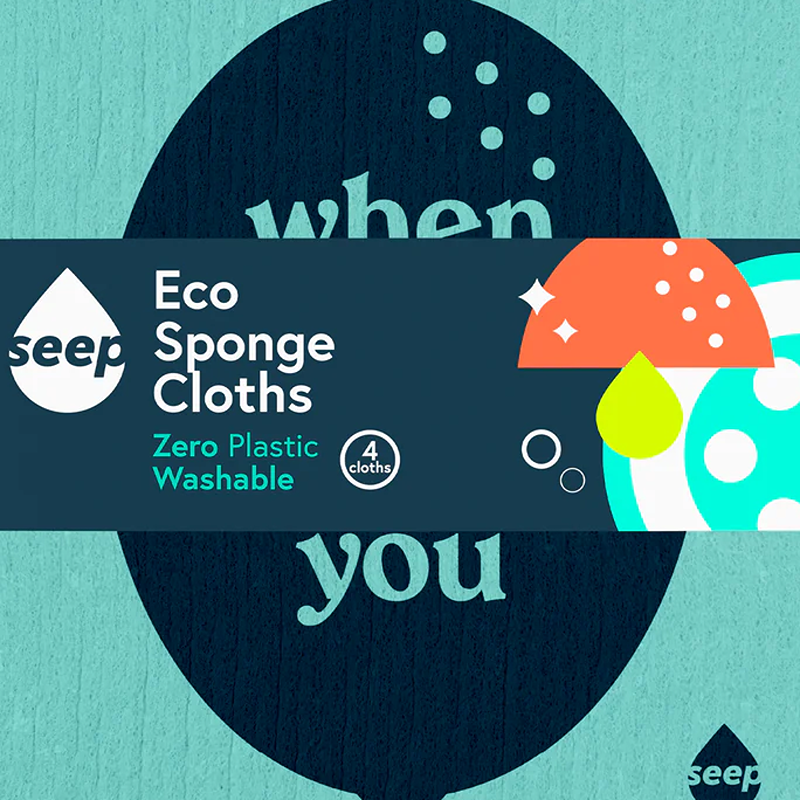
Conventional cleaning cloths and sponges (like those green nylon scrubbers) contain nylon (plastic). So each time you rinse them under water, they release microplastics which go down the drains and out to sea. They break down into microplastics and get accidentally ingested by marine wildlife. Most are also packed in plastic.
There’s no need, as a small investment in some plastic-free quality alternatives, means you can clean and scrub just as well, do no harm to the planet, and then wash the items again and again. Then at end of use, just bin to safely biodegrade back to the earth.
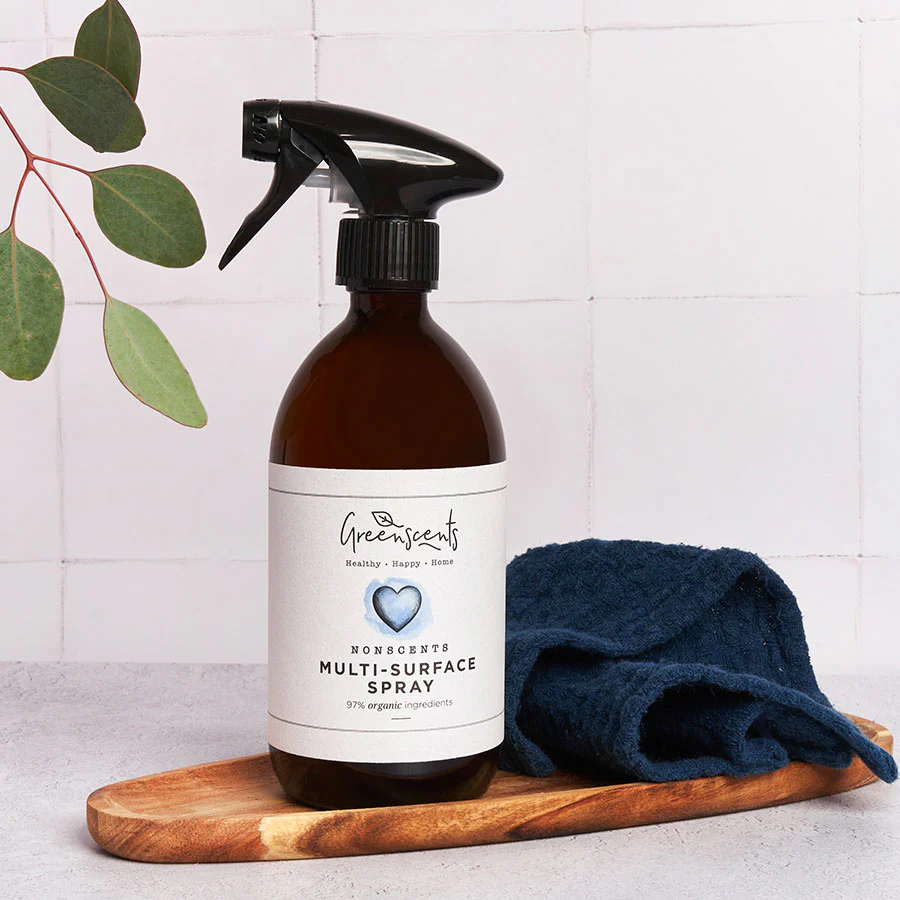
- Choose unscented cleaning products and washing-up liquids for pregnancy/nursing (or around babies/pets including cleaning bowls). Citrus oils in are toxic to pets, even if rinse and dried on surfaces and floors.
- Replace chlorine bleach with natural oxygen bleach to remove tea/coffee cup stains. Never mix any kind of bleach with acid (lemon or cleaning vinegar) as it causes toxic gas.
Seep plastic-free cleaning cloths (use as dusters)
These dusters don’t leach microplastics in machines, unlike most. You can use them dry as dusters, or wet for general cleaning.
Seep plastic-free sponges and scourers
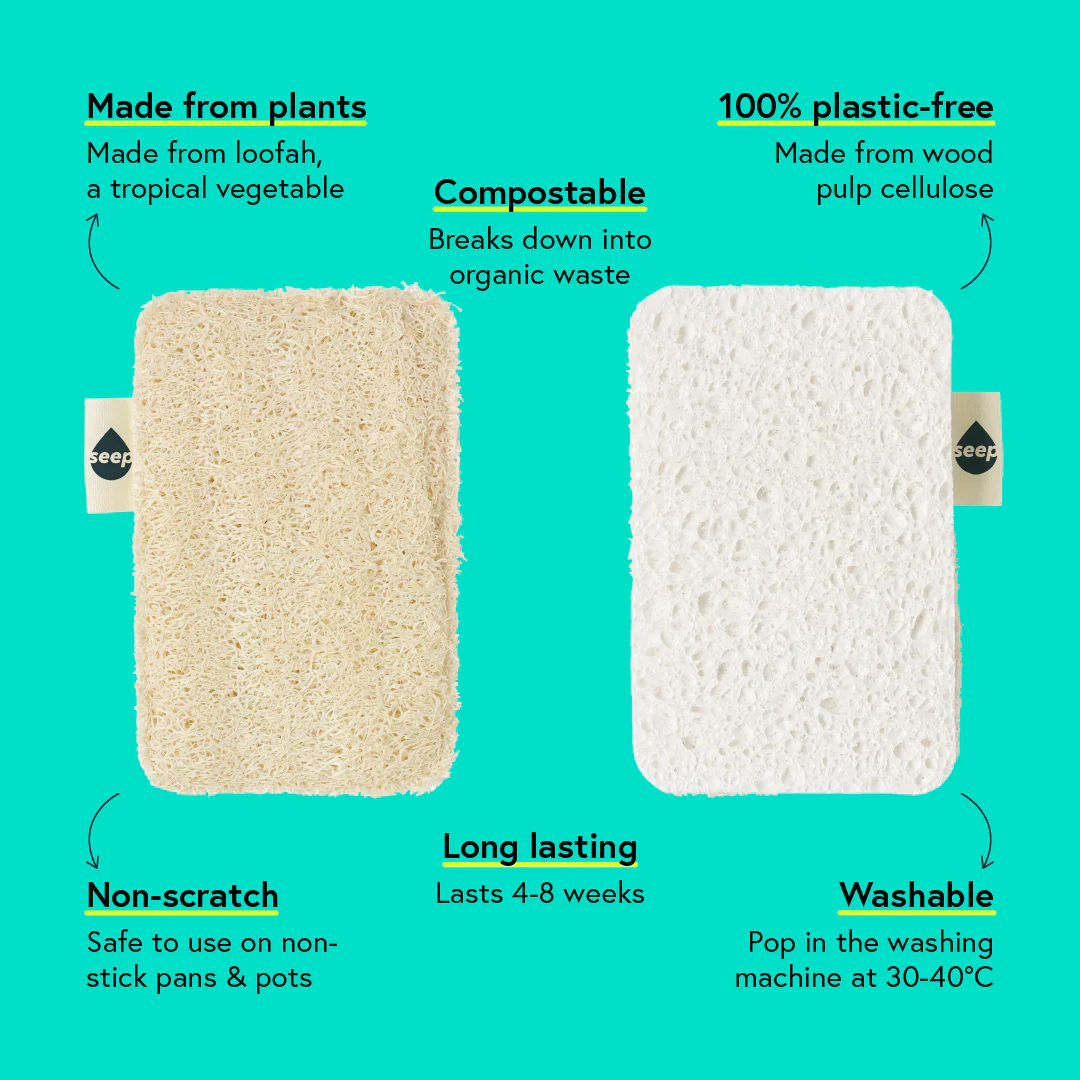
Seep is the top brand to choose. It offers a great selection of sponges, against without leaching microplastics down sinks and in to the sea. You can even pop these in the washing machine without harm.
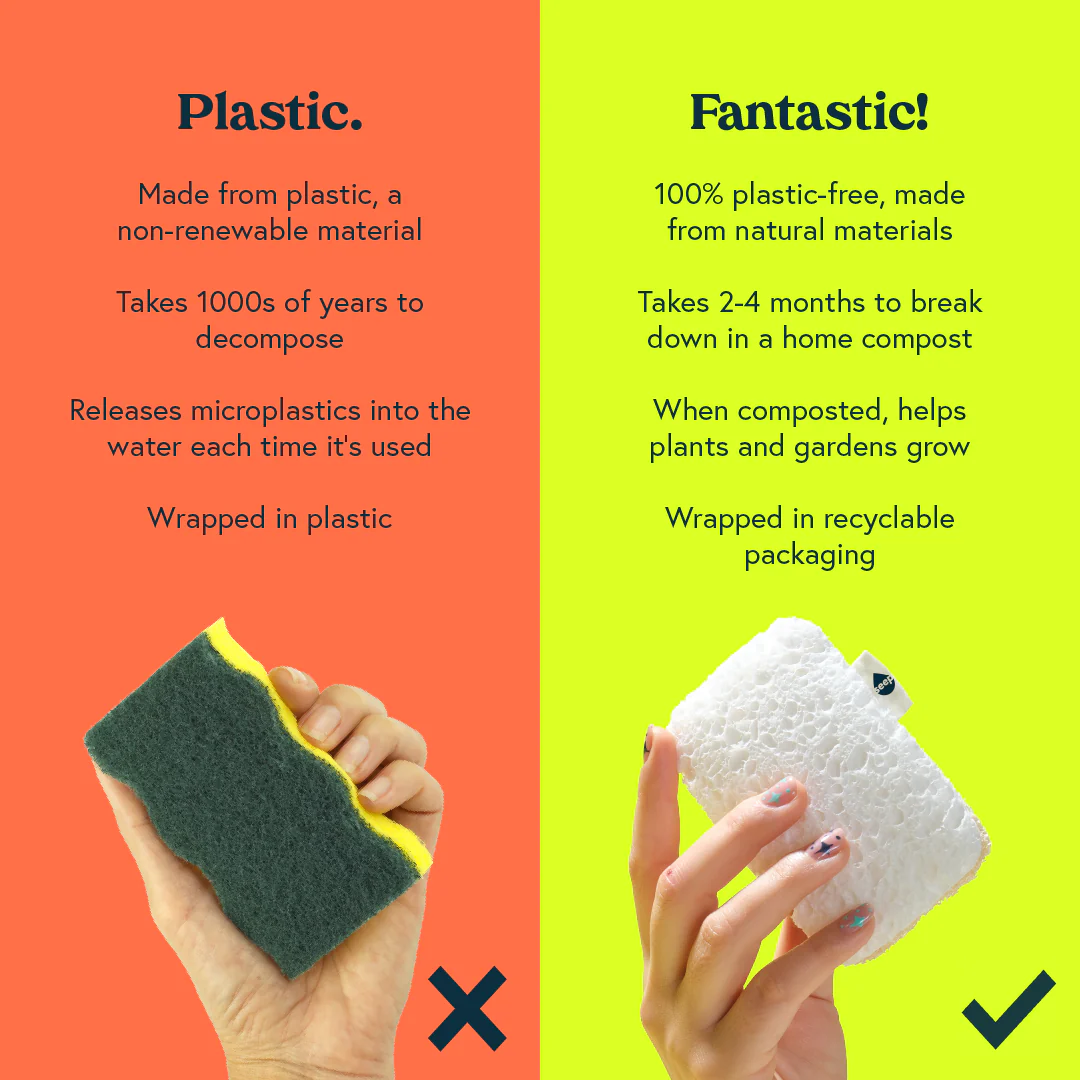
Use them to replace those nylon green-topped sponges, sold in plastic packaging.
The eco pop-up sponges are easily sent through the letterbox. Then just run under water to turn into a thick and effective cleaning sponge.
A bamboo washing-up brush
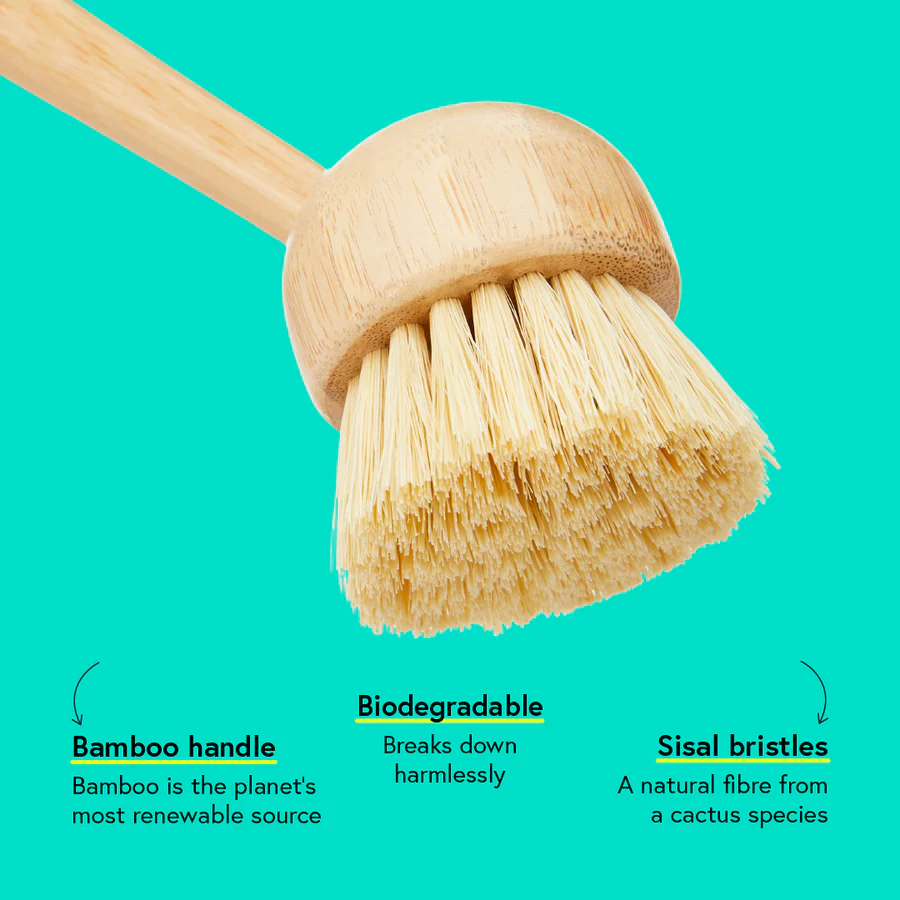
This bamboo washing-up brush has bristles made from sisal (a type of cactus) to tackle grease and grime, without scratching dishes. At end of use, just pop in the compost bin (or bin) to naturally break down, with no harm to the planet.
Seep Fair trade rubber gloves (plastic-free)
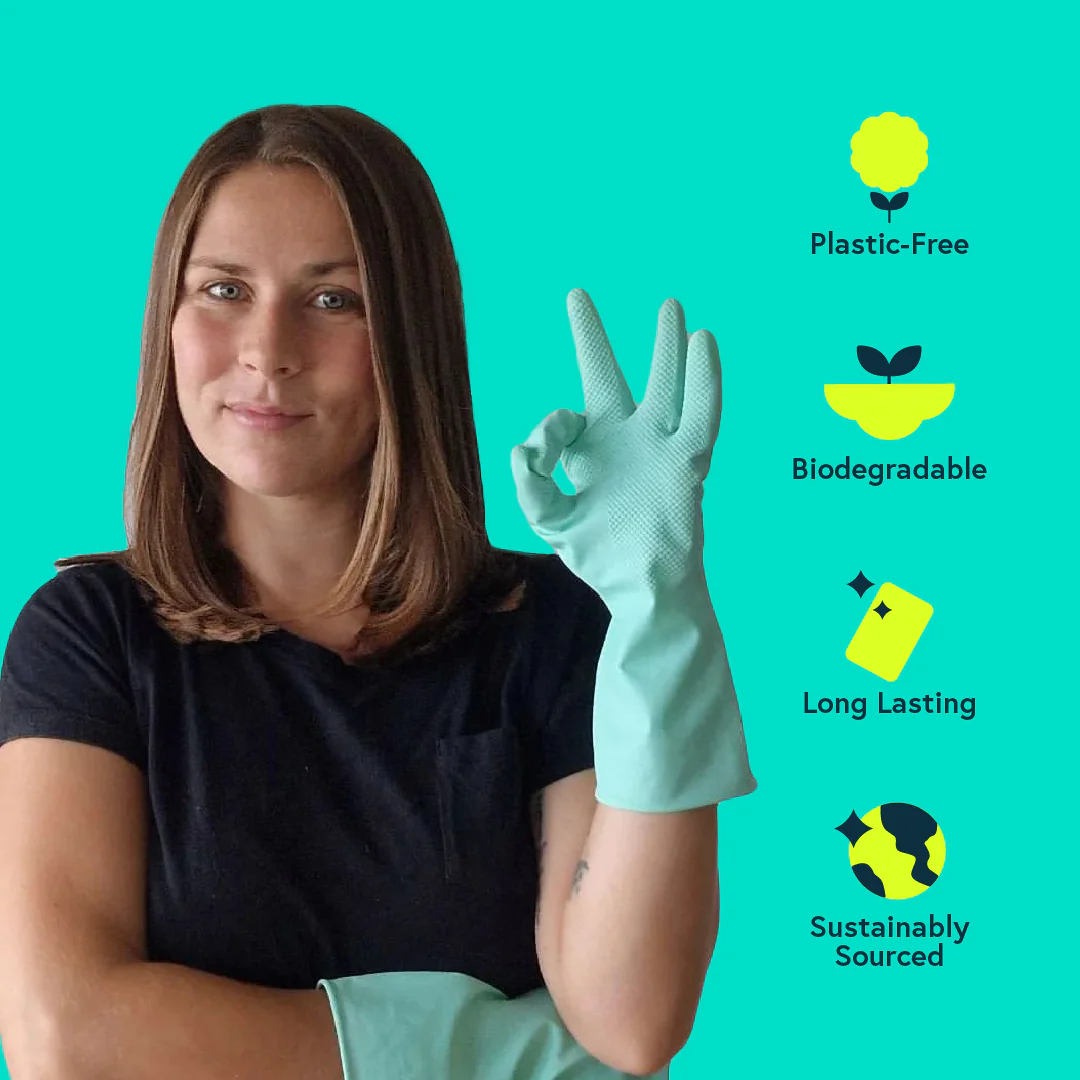
Seep rubber cleaning gloves are good quality and made with natural rubber, but unlike most brands, sold in cardboard. They have textured fingers to grip items.
Designed with soft lining for extra comfort, each pack includes 3 packs of gloves which should last you a long time. Made ethically in Sri Lanka, choose from small, medium or large sizes (rinse with water after use, dry out between uses, and store away from sunlight (to prevent mould).
The natural rubber is sourced from trees by tapping (like maple syrup, this does not require trees to be chopped down). So does not contribute to deforestation. And this company also donates to reforestation projects, to offset the carbon from shipping the rubber.
Avoid for latex allergies. Use a separate pair for dishwashing, than cleaning. At end of use, cut them up (to speed up biodegradation) and pop in your bin!
Where to recycle cleaning products
If you have some toxic products that you no longer wish to use, don’t pour them down the sink, as this can harm waterways. You can recycle empty containers with household waste. With bottles still containing product, your council should be able to collect via the hazardous waste department. The fact that this is where they should be taken, is good reason to switch to a more natural brand!
Dream Cloth (a washable paper towel alternative)
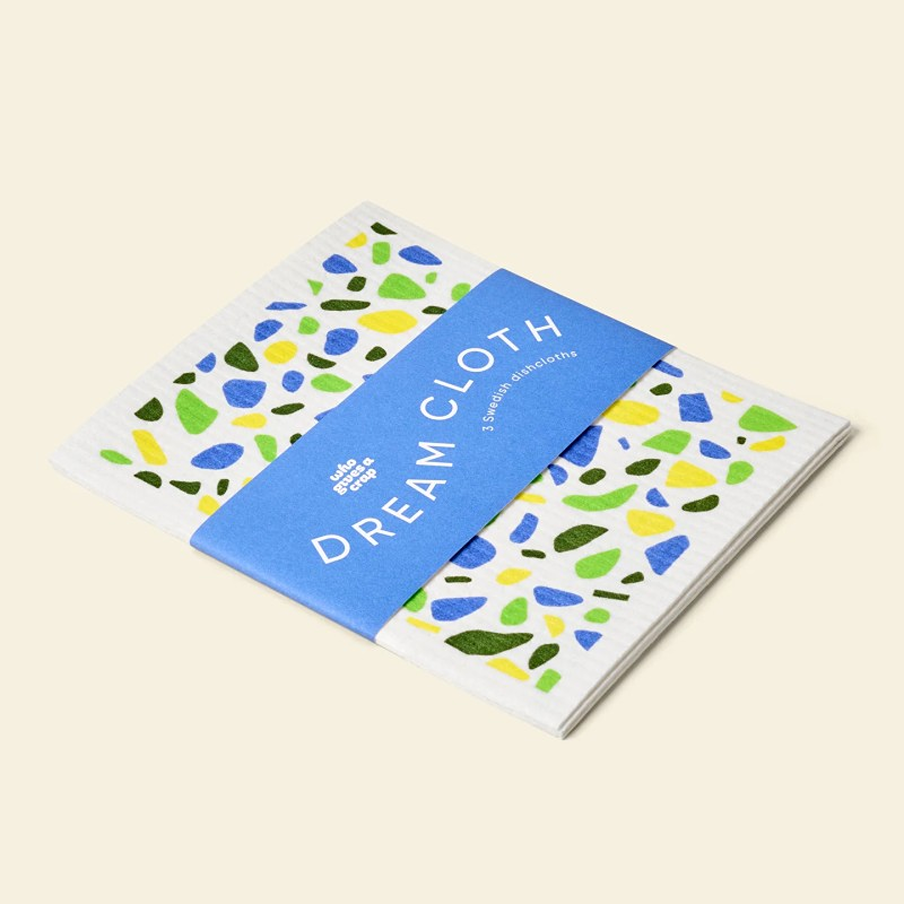
Tired of buying rolls of paper towels that end up in the bin after one use? Dream Cloth offers a fresh way to clean that keeps your home tidy and helps the planet. These reusable towels can handle big messes, simple spills, and everyday wipes.
Sold in packs of 3, Dream Cloths are one part sponge, one part cloth and three parts marvellous! Perfect to wipe up spills or wipe countertops and appliances, the cloth can hold 13 times its weight in water, and is also fast to dry, so you never get that icky sponge smell.
When you first receive your dream cloth, you’ll notice is a bit crispy. But that what helps to stop bacteria. A quick rinse under the tap, and it magically transforms to absorb like a sponge, or scrub like a cloth.
Each year, around 1 million trees are chopped down daily (mostly in Boreal forests that are home to moose, elk, wolves and grizzly bears), just to make kitchen roll that is then wrapped in plastic. Just imagine the effect if everyone switched to recycled paper, sugar cane or bamboo rolls instead?
Did you know that in Japan, nobody uses disposable paper towels? It’s because 11% of land is arable, so people there don’t have the luxury of creating landfills or even ‘industrial composting heaps’. If you’re fed up of sorting waste into two or three bins, know that residents of one Japanese town have to recycle into 45 categories.
What are dream cloths made from?
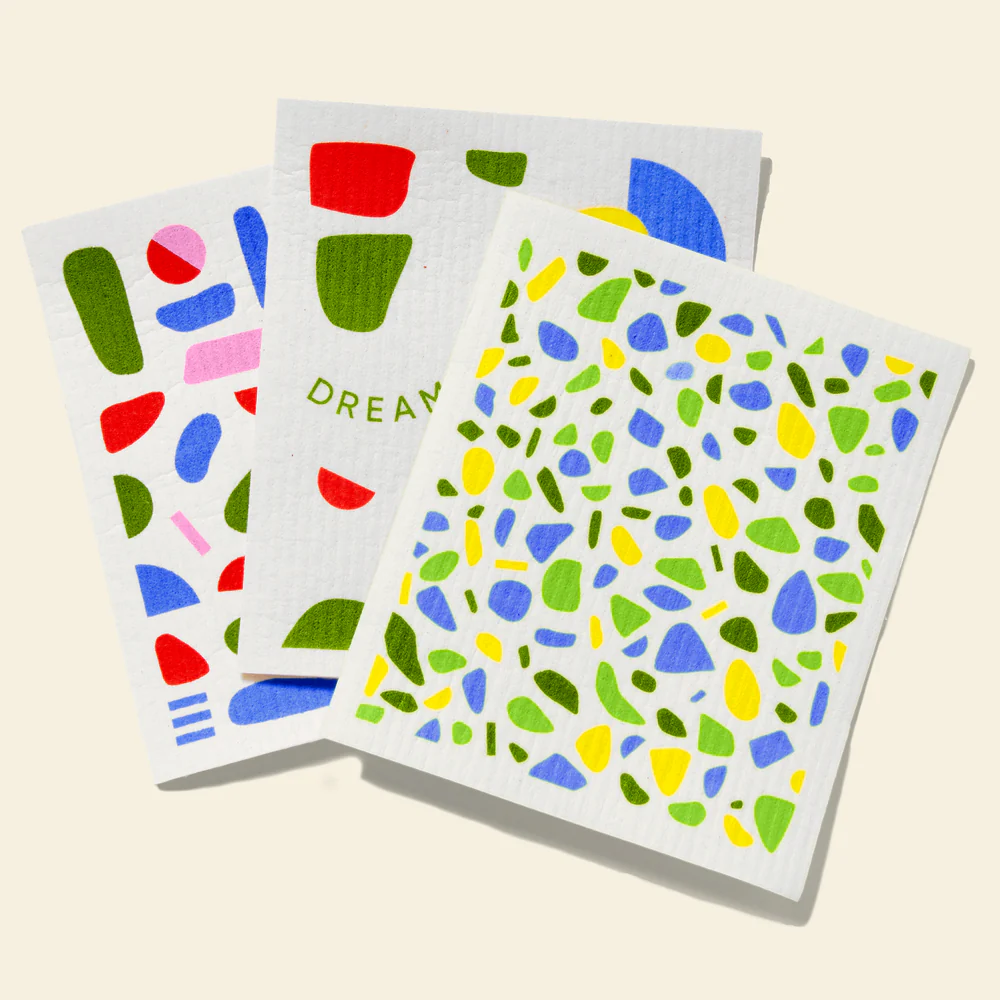
They are made from a blend of repurposed cotton and cellulose (wood pulp). So no synthetics like microfiber or recycled plastic). So they can safely be laundered or go in the dishwasher, without releasing microplastics into the ocean. Dry flat.
Do not use fabric conditioner (not tumble dry) as this reduces absorbency.
Designed to last around 50 washes (9 months), there are three Dream Cloths in each pack. So perhaps keep one for each wet room in the house?
Then just cut up and compost at end of use, or bin to naturally biodegrade.
And this company donates 50% of profits to sanitation projects abroad, so that people have access to clean hygienic toilets.
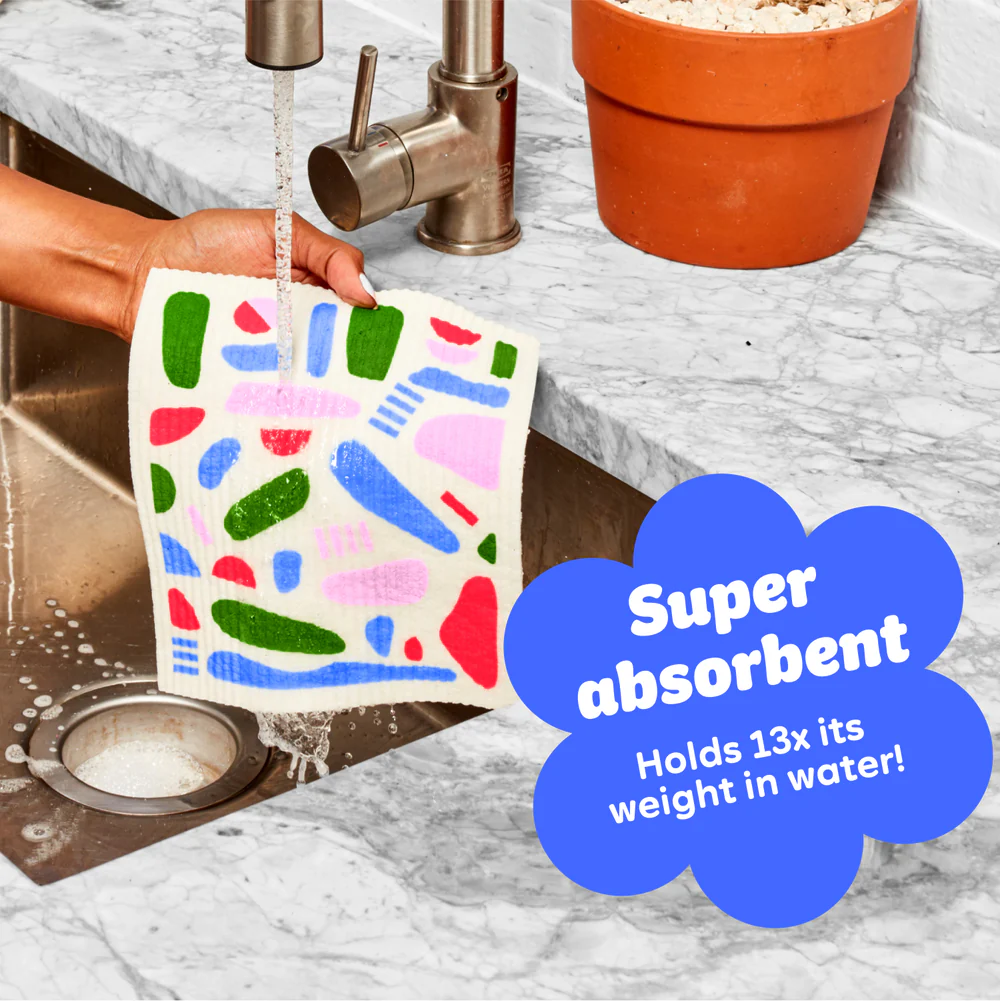
They’re not cheap (£8 for a pack of 3), but live up to all the promises. Would recommend them.
Good quality durable cloth, with sponge-like texture.
Really handsome cloths, and a good size for everyday cleaning.
I use them in the kitchen, bathroom and laundry. Best thing is they won’t contribute to landfill.